The impact of Nicolás Maduro’s authoritarian leadership on human rights in Venezuela (2013-present)
In 1964, Juan José Linz defined authoritarian regimes as “systems with limited…political pluralism” where a leader “exercises power within …ill-defined limits” (Purcell et al., 1973). Linz’s description highlights three key features: the suppression of opposition due to a lack of political “pluralism”, the concentration of power, and “ill-defined” checks on authority. Under Nicolás Maduro, President since 2013, Venezuela has mirrored this framework: Venezuela’s 2018 presidential election, for instance, was characterised by a record-low voter turnout (Rodríguez, 2018), the barring of opposition candidates and voter coercion through threats to withhold government aid via the CLAP programme (OHCHR, 2018).
Human rights, the universal, indivisible, and inalienable freedoms to which everyone is entitled, encompass both negative rights - which require non-interference from states - and positive rights- which are granted through government provision (Murphy and Gleek, 2016). Arguably eroding both, Maduro’s authoritarian regime has engaged in arbitrary detentions, arrests and torture, whilst exacerbating food insecurity and health crises through the mismanagement of public funds.
The significance of the relationship between authoritarianism and human rights stems from the increasing prevalence of democratic backsliding: a study by Valgarðsson, using data from 3,377 surveys across 143 states, identified a global decline in trust towards democratic institutions. Valgarðsson theorised that disillusionment could prompt citizens to turn to extremist actors promoting radical reforms, leading to the rise of autocratic leaders seeking to dismantle democracy (Viktor Orri Valgarðsson et al., 2024). While Venezuela has exemplified this trend, the global political challenge (that is, the erosion of human rights under authoritarian regimes) extends beyond Maduro. Notably, the systemic violation of negative rights has been prominent in Myanmar under the military junta; additionally, in the Democratic People’s Republic of Korea (DPRK), Kim Jong Un’s “military-first” policy favourably allocates resources towards the military (Yeo and Vakasi, 2006) over public services, hindering positive rights alongside socioeconomic development.
Across these cases, unchecked authority has enabled rights violations, making it vital to explore how authoritarianism drives such abuses, particularly as we witness a resurgence in authoritarianism globally. Accordingly, this essay asks: to what extent has Nicolás Maduro’s authoritarian leadership contributed towards human rights violations in Venezuela (2013-present)?
Methodology
Tools
This essay investigates the global issue of human rights violations stemming from authoritarian leadership through the concepts of power and development. Power is used to explore the erosion of traditional, charismatic, and rational-legal legitimacy under Maduro, who has limited state power and enabled escalating abuses of negative rights (Human Rights Watch, 2025). On the other hand, development evaluates how authoritarian regimes, lacking accountability, fail to advance socioeconomic development, limiting the realisation of positive rights. Across the two sections, the thematic study of rights and justice will explore violations of positive and negative rights under frameworks such as the Universal Declaration on Human Rights; when approaching a conclusion, this essay will acknowledge that there are limitations in imposing a legal framework upon historically and culturally fluid concepts such as rights.
Despite the essay’s focus on Venezuela, analysis extends beyond a national level: Maduro’s authoritarian leadership is explored in a regional and international context. At each level, key stakeholders and perspectives are examined, whether it be Maduro and the Venezuelan government, civilians, or inter-governmental organisations (IGOs). Similarly, this essay engages with the theoretical foundations of realism and liberalism alongside the critical theory of Marxism, to approach the global issue with multiple perspectives. To justify whether the relationship between authoritarianism and human rights is causative (rather than correlational), this essay will compare Maduro’s leadership with similar authoritarian regimes, such as Myanmar’s military junta or the DPRK under Kim Jong Un, and identify trends across the cases; this will enable a comprehensive evaluation of the research question.
Sources
Given the gamut of perspectives surrounding Maduro, a range of sources was used to analyse the global issue. Using empirical evidence collated by reputable non-governmental organisations (NGOs), such as the Human Rights Watch, measurable impacts on human rights were identified. NGOs’ research was valuable as data obtained through investigations, fieldwork, and interviews was likely reliable and accurate. However, NGOs often face operational constraints, limiting the scope of their reporting. A challenge encountered during this essay was avoiding the introduction of bias into arguments. Many sources, particularly government-run media, reflected ideological views rather than thoroughly evaluating Maduro’s leadership. To mitigate this, the essay utilised secondary sources, such as academic literature, which offered extensive detail without pushing any particular agenda. Yet, many academic journal articles focused on niche aspects of the crisis and were not up-to-date. Thus, to obtain relevant evidence, this essay also consulted contemporary news reports, which unfortunately reflected biases to a certain extent.
Power and the Violation of Negative Rights
Power is the ability of an actor to influence the outcome of a situation (Nye, 2001; Barnett and Duvall, 2005). Regrettably, ‘power’ is often used interchangeably with ‘authority’, which only encompasses legitimate power. Legitimacy is the belief that a leader possesses “the right to govern” (Hurd, 2022) and can be distinguished into Weber’s three types: charismatic legitimacy, stemming from a leader’s likeability; traditional legitimacy, grounded in long-standing societal customs; and rational-legal legitimacy, power legitimized by fair, bureaucratic institutions (O’Neil, 2018).
Hugo Chavéz, Maduro’s predecessor, relied heavily on charismatic legitimacy. His followers, known as “Chavistas”, even referred to Chavéz as the “eternal commander” following his death (Fusion, 2013). The same did not hold for Maduro. Despite heavily aligning himself with Chavéz, Maduro lacked charismatic appeal and failed to appeal to Chavéz’s electoral base. Widespread opposition towards Maduro, evident in that 52% of the 2014 protests expressed frustration specifically with Maduro and a 19.6% decline in his approval rating, indicated that he lacked charismatic legitimacy (Robertson, 2014; Lapatilla, 2015; Oner, 2021). Similarly, because Venezuela’s governance structure is not grounded in societal customs, Maduro lacked traditional legitimacy. Critically, Maduro failed to garner rational-legal legitimacy, instead undermining Venezuela’s system of checks and balances: the separation of state powers among the executive, legislative, and judiciary branches to prevent tyranny and the concentration of authority (Waldron, 2013). Evidently, in 2015, the lame-duck National Assembly, controlled by Maduro’s PSUV, appointed 34 justices (El Nacional, 2015) to the Supreme Tribunal of Justice (STJ) in flagrant violation of Article 264 of the Venezuelan Constitution (Ruchti, 1999). This ensured the judiciary's loyalty to Maduro, eroding judicial independence. Subsequently, the STJ, aligned with Maduro, declared the opposition-controlled National Assembly “null”, ruling against the legislature at least 30 times in 2016 alone (Sonneland, 2016). Limiting the power of both the judiciary and legislative branches, Maduro eliminated constitutional checks preventing unrestrained executive authority, thereby adopting an authoritarian form of governance and eroding rational-legal legitimacy. Without charismatic, traditional, or rational-legal legitimacy, Maduro lacked the power to govern through consent (in other words, authority); his regime instead relied on hard power and coercion.
On a national level, the employment of hard power violated civilians’ negative rights, evident in the 2017 protests. In late March 2017, the STJ dissolved the opposition-led National Assembly (Romo, 2017). Adopting a contractarianist view, liberals would likely criticise this, stressing the importance of the implicit social contract between civilians and the government in a state. Civilians cede freedoms for government protection from instability (Castiglione, 2015). Suppose a government erodes institutional checks and balances, contributing to less civic representation. In that case, it effectively fails to meet its end of the social contract. It is no longer legitimate, enabling its role as a means to an end for civilians to dissolve, and allowing civilians to engage in protest (Taylor, 2015). In this way, the dissolution of the National Assembly was met with “the most combative [protests] since a wave of unrest in 2014” (Panorama, 2017; Baraily, 2020). Involving 6 million civilians, the “mother of all protests” was among the largest and most significant (Dwyer, 2017). It revealed the extent of coercion employed by Maduro to suppress dissent. His regime, alongside colectivos, was responsible for 165 deaths, over 15,000 injuries, and nearly 5,000 arbitrary arrests (Unidad Investigativa de Venezuela, 2019; BBC, 2018; El Nacional, 2017). This crackdown encroached upon human rights detailed in the Universal Declaration of Human Rights, to which Venezuela is a signatory, including Article 3 (right to life), Article 9 (protection against arbitrary arrest), Article 19 (right to freedom of opinion), and Article 20 (freedom of peaceful assembly) (United Nations, 1948). Unlike positive rights, often unmet due to socioeconomic conditions rather than extractive political institutions, the violation of these negative rights was a result of Maduro’s authoritarian repression. Had checks and balances existed, it is plausible that institutions would have held Maduro accountable. This indicates a causative relationship between authoritarianism and rights violations: repression is more likely to occur when executive power is unchecked. Maduro’s domestic approval rating of 20% (the lowest in South America) suggests that his exertion of hard power further delegitimised his regime (Sánchez, 2024), prompting greater authoritarian measures to maintain control, thereby exacerbating rights violations and strengthening the relationship between authoritarianism and humanitarian instability.
While Maduro exercises his power domestically, his regime operates within an international system that, broadly, attempts to limit the violation of rights. As such, the relationship between authoritarian regimes and human rights violations is arguably weaker on an international level. This can be explored in the context of IGOs. This is not to say that IGOs directly control states’ domestic policy; however, in setting international norms which member states are expected to follow, such as human rights protections, they wield structural power. States’ failure to comply with IGOs’ standards could result in revoked membership alongside deteriorated soft power, potentially reducing access to aid or trade prospects. Constructivists argue that international norms thereby shape the behaviour of authoritarian states, which seek to maintain international legitimacy in order to avoid regime-threatening sanctions or conflicts. On this basis, IGOs limit the impacts of authoritarianism upon human rights by indirectly prompting authoritarian states to introduce less severe domestic policies. Evidently, the STJ allegedly reversed measures that had weakened institutional balances following repeated condemnation from the Organisation of American States (OAS), a regional IGO focused on human rights and socioeconomic development across the Americas, regarding Maduro’s regime for its violations of human rights, suppression of protests and use of force against its citizens (Human Rights Watch, 2017). This case exemplified how normative pressure on an international level constrains authoritarian regimes, preventing them from exercising unchecked power (Sánchez, 2017). Yet, this analysis fails to acknowledge that states have the right to non-interference in their domestic affairs under Article 2(7) of the United Nations Charter. As IGOs cannot enforce decisions when a state chooses not to comply, there is no incentive for authoritarian regimes to adopt reforms, meaning IGOs’ structural power is, in fact, limited. Evidently, in 2017, Venezuela announced its withdrawal from the OAS, arguing that the IGO had interfered in its domestic affairs (BBC, 2017), constituting a breach of internal sovereignty. Additionally, realists believe that IGOs naturally support the interests of the most powerful states; this exposes a further limitation of IGOs’ ability to reduce rights violations. Essentially, soft power is only effective when there is a degree of alignment in values or willingness to be influenced, evident in Murphy’s realisation “what persuades in Paris may not in Damascus” (Murphy and Gleek, 2016). When the views of IGOs (which reflect the interests of powerful states, such as Western democracies) differ significantly from those of authoritarian states, soft power alone cannot deter rights violations. Consequently, even when IGOs employ soft or structural power to enforce international norms, authoritarian regimes may choose to prioritise the consolidation of power nationally. While this does not mean that IGOs are irrelevant, evident in the STJ’s temporary reversal of measures that eroded checks and balances, it suggests that the relationship between rights and authoritarianism is still significant internationally, just as it is nationally.
By comparing Venezuela with Myanmar, patterns of how authoritarian regimes contribute to violating negative rights can be identified, reflecting a causal relationship, rather than a correlation specific to Venezuela. Like Maduro, Min Aung Hlaing is illegitimate under Weber’s framework. Specifically, Min Aung Hlaing’s unlawful consolidation of power through a military coup in 2021 upon losing the general election (King, 2022) indicated an absence of rational-legal legitimacy. Widespread protests, sparking an eventual civil war, against Min Aung Hlaing’s leadership (Tharoor, 2022) suggested he lacked charismatic legitimacy. In Venezuela and Myanmar, where leadership is neither hereditary nor customary, neither leader held traditional legitimacy. Like Maduro, Min Aung Hlaing relied on hard power to maintain control. Facing limited accountability, Min Aung Hlaing’s regime has carried out attacks against civilians in blatant violation of international law, killing 6,000 and arbitrarily detaining 20,000 (Amnesty International, 2021); intuitively, this has severely violated negative rights. On an international level, ASEAN’s Five-Point Consensus regarding the cessation of violence in Myanmar went largely ignored by the military junta, exemplified in increased levels of violence, enabling further violations of negative rights. Such parallels between the regimes support the assertion that the absence of legitimacy leads to a reliance on coercion and unchecked political power, enabling the violation of negative rights. It is critical to note that there are some limitations when it comes to comparing a Latin American petrostate to a Southeast Asian state characterised by armed conflict since independence in 1948. For instance, the situation in Myanmar is arguably a product of long-standing ethnic tensions (Kaicome, 2019), whilst Venezuela’s transition from a democratic state to an authoritarian regime largely took place under Maduro. Even then, it is important to note that the 2021 coup, which served as a catalyst for the ongoing civil war, exemplified an authoritarian consolidation of power, which ultimately enabled the widespread violation of human rights.
Development and the Violation of Positive Rights
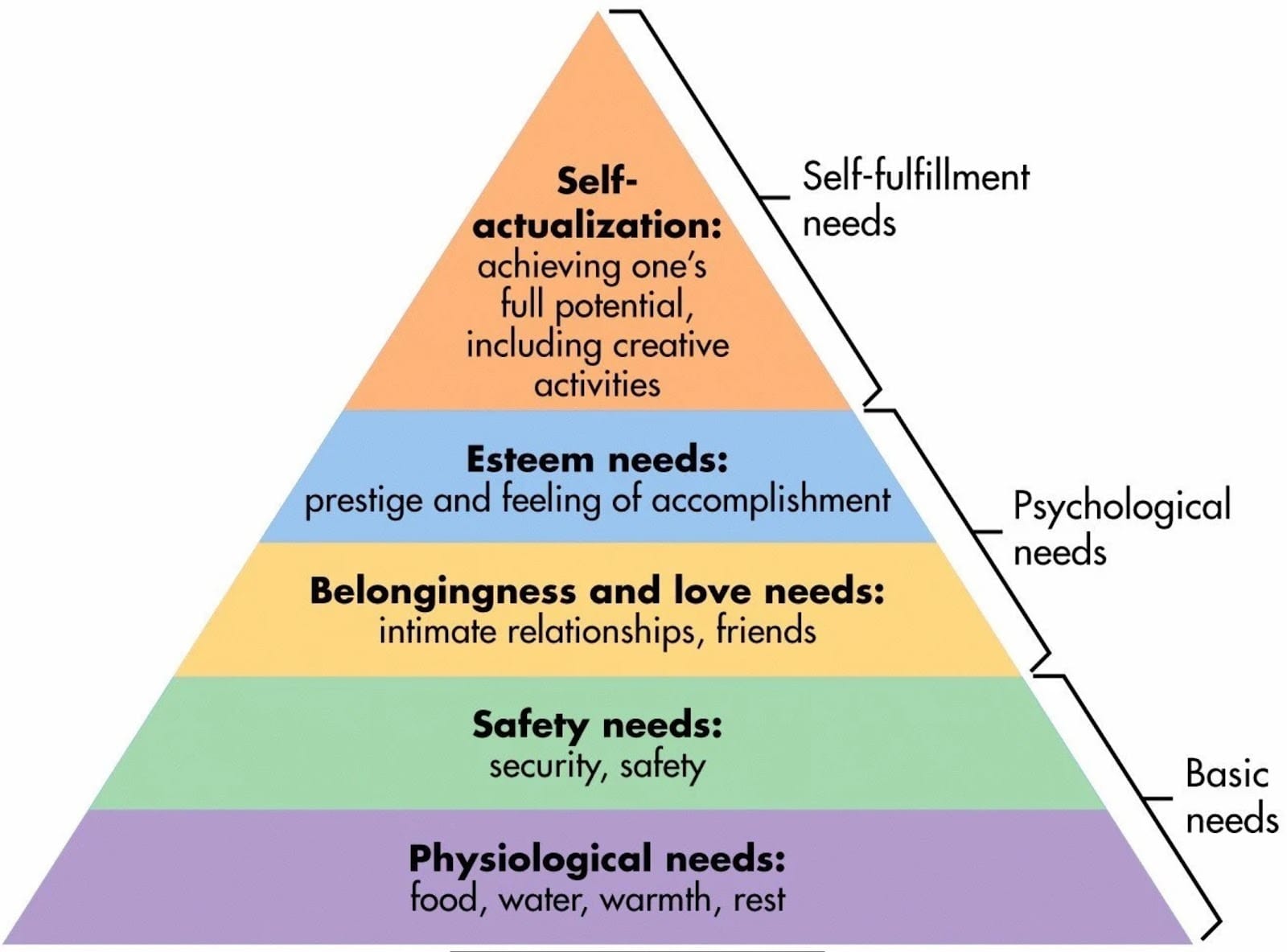
Figure 1: Maslow’s Hierarchy of Needs (McLeod, 2025)
Development refers to a sustained increase in the standard of living. Human development focuses on improvements in well-being, reflected in progress from basic to self-fulfilment needs under Maslow’s hierarchy, illustrated in Figure 1 (Murphy and Gleek, 2016). There exists an interdependent relationship between positive rights and human development: the realisation of positive rights ensures that physiological and safety needs- the foundation of Maslow’s hierarchy- are met, and measures to advance human development enable individuals to exercise positive rights. The state is central to this relationship. This claim is supported by the Capability Approach, which asserts that human development must be assessed by the rights individuals can exercise, rather than those they are merely entitled to (Robeyns, 2011); stemming from this approach comes the argument that, to accelerate human development, governments must equip individuals with the capability to access their rights, typically in the form of food, water, and shelter (Benería, 2008). Similarly, positive rights definitionally rely on government provision, highlighting that both human development and positive rights are contingent on the state. In democracies, leaders are incentivised to provide services and uphold human rights as political authority is contested regularly through elections, and citizens can hold governments accountable when positive rights are unmet (Halperin, Siegle and Weinstein, 2016; Boese and Wilson, 2022). Conversely, the concentration of power in authoritarian states reduces leaders’ incentive to respond to societal needs, as their power is not contingent on public approval, thereby undermining human development. As human development and positive rights exist interdependently, and authoritarian regimes fail to encourage human development, it follows that positive rights are more likely to be violated in authoritarian states.
Nationally, the violation of positive rights in Venezuela can be explored through the state’s inadequate response to the economic crisis. In June 2014, global oil prices plunged by 70%. Venezuela, a petrostate deriving 95% of export earnings from oil, suffered devastating effects (Meacham, 2014). It had fallen vulnerable to Dutch disease, whereby excessive dependence on oil had weakened other sectors of the economy, rendering government revenue reliant on high oil prices (Natural Resource Governance Institute, 2015). Following the price shock, Maduro engaged in excessive money printing, pushing Venezuela into hyperinflation (Muci, 2024). This reduced civilians’ purchasing power, requiring more money to purchase the same goods. Evidently, food prices soared in 2017: this was exacerbated by severe shortages, since 70% of food in Venezuela was imported before the price crash (Human Rights Watch, 2019). Amidst hunger, Maduro placed the military in charge of food distribution. Susceptible to bribery, officials often favourably allocated food towards loyalists, leaving the bulk of Venezuela’s population in severe hunger (Pronk, 2019). This reveals how Maduro’s poor economic management hindered economic growth, forcing civilians to bear hyperinflation. As civilians could not access food, a basic need under Maslow’s hierarchy, human development declined: this is supported by a decrease in Venezuela’s score on the Human Development Index (HDI), an empirical indicator, in the years following the oil price crash (Figure 2). In holding a monopoly over food, Maduro’s regime failed to comply with Article 11 of the International Covenant on Economic, Social and Cultural Rights (ICESCR), which declares that states must oversee the “equitable distribution” of food (United Nations, 1966). The violation of the positive right to food arguably occurred due to the lack of contestability and participation prevalent in authoritarian regimes. Without any means of being held accountable, Maduro faced no pressure to distribute food equitably, allowing his regime to use hunger as a tool for political control.
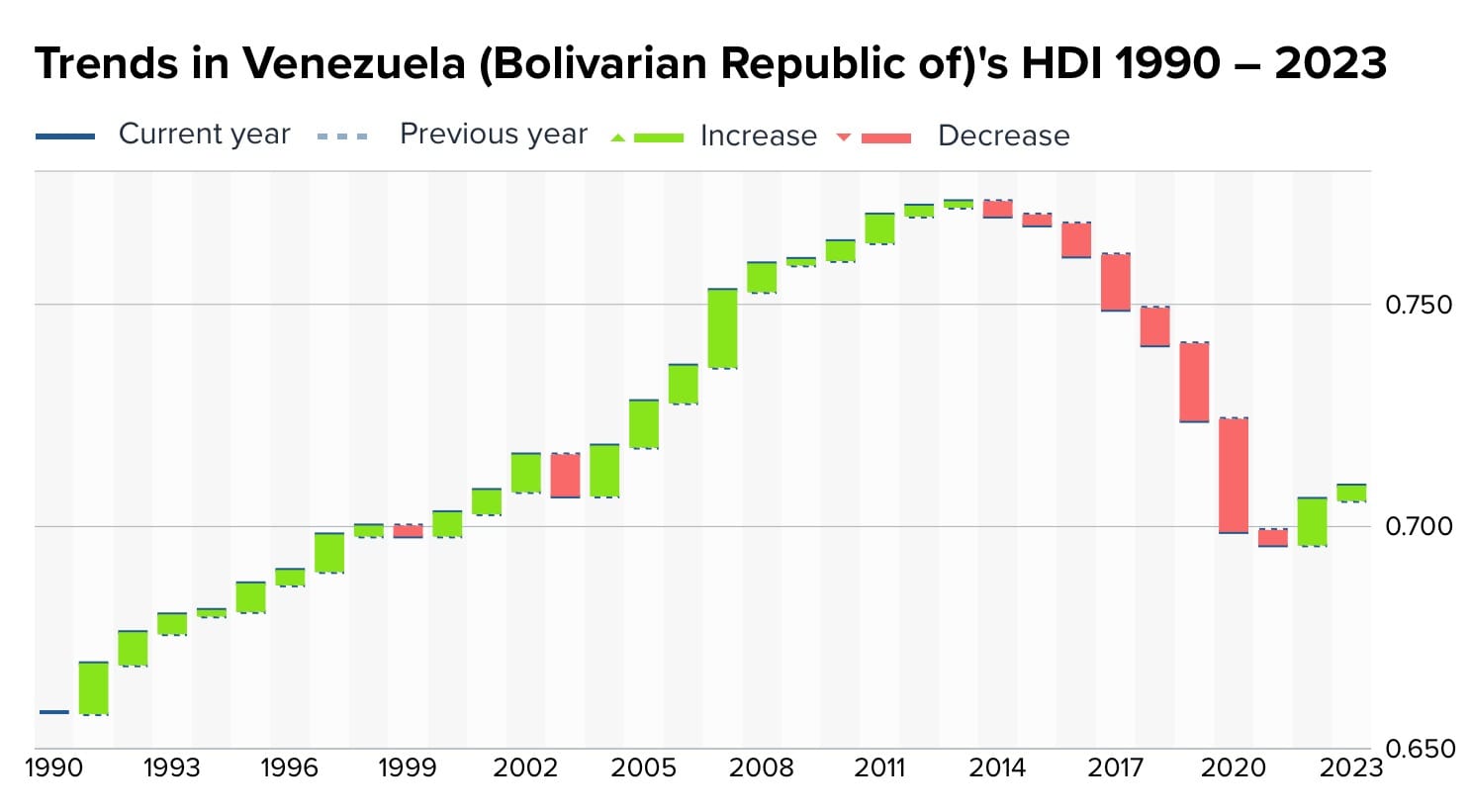
Figure 2: Venezuela’s Human Development Index Score (United Nations, 2022)
A liberal would likely support a conclusion emphasising the significance of democratic institutions in safeguarding positive rights. A Marxist, however, would contend that deteriorating human development following the economic crisis didn’t solely stem from Maduro’s mismanagement, but from the inequalities prevalent in the global capitalist system. This can be understood by distinguishing between “core countries” in the Global North and “periphery countries”, which are less economically and politically developed. Unlike “core countries” with diversified, industrialised economies, “periphery countries” specialise in primary products, such as oil in the case of Venezuela, making them vulnerable to volatile prices (Hartmann et al., 2019). From this perspective, disproportionate effects upon Venezuela’s economy following the 2014 oil price crash were shaped by systemic factors; even without money printing, the state would have likely faced an economic crisis due to its dependence on oil. Yet, while the Marxist outlook points out Venezuela’s vulnerability as a petrostate, thereby explaining the reason for the financial crisis, it fails to acknowledge the argument that Maduro’s response and poor management exacerbated the situation. Even if the economic crisis was an inevitable outcome of the oil price plummet, excessive money printing and placing food distribution in the hands of the military, choices which democratic leaders would have been held accountable for electorally or through protesting, were not. Like Venezuela, Colombia experienced a decline in oil revenue following the price crash. Unlike Venezuela, however, the state implemented a carbon tax in 2016 to reduce dependence on oil and raise government revenue (Bae et al., 2024). The comparison between Colombia and Venezuela, with a constant external variable, highlights how it was Maduro’s unchecked leadership that enabled him to make specific policy choices, ultimately leading to the decline of human development and the loss of positive rights.
Regionally, Maduro’s leadership has fuelled the Venezuelan refugee crisis. Several push factors have driven emigration; however, insecurity is a primary cause. Evidently, Venezuela has the highest crime rate and lowest safety score globally, despite being a nation in peacetime (World Population Review, 2025). Theft has been driven by shortages following hyperinflation and the failure of Maduro’s regime to distribute necessities adequately (Oré, 2015). Additionally, police forces have extrajudicially killed over 18,000 Venezuelans, particularly in neighbourhoods opposed to Maduro’s regime, to deter anti-government sentiment (Human Rights Watch, 2019). In both instances, Maduro’s regime, facing no accountability, created a political landscape characterised by insecurity, hindering human development. The effects of Maduro’s leadership have extended beyond Venezuela; an exodus of over 7.7 million refugees, emigrating due to unsafe living conditions, has placed an immense strain upon host states (Centre for Disaster Philanthrophy, 2024). Colombia, for instance, hosts the bulk of displaced Venezuelans, grappling with millions of internally displaced Colombians simultaneously. Despite measures taken by the state to integrate refugees, such a significant influx has placed a strain upon essential services in Colombia, such as healthcare, transport, and education, limiting access to positive rights not only for Venezuelan refugees but also Colombian citizens (Schiavenza, 2025). Ultimately, Maduro’s authoritarian leadership has stifled human development so greatly in Venezuela that mass emigration has occurred, leading to hindrances to human development regionally, as revealed in the context of Colombia. Consequently, regional governments arguably have a lower capacity to provide access to positive rights, highlighting the relationship between authoritarianism and rights on a regional scale.
To position the violation of positive rights as a consequence of unchecked leadership rather than a correlation, Maduro’s leadership can be contrasted with Kim Jong Un’s totalitarian leadership of the DPRK. While both states are autocracies, Kim Jong Un’s leadership is totalitarian: a form of authoritarianism where, beyond concentrating power and limiting political pluralism, the executive governs citizens’ lives holistically (Pipes, 1994). The comparison between the two states isn’t an attempt to equate totalitarianism with authoritarianism, but to highlight that, despite differences in degree, the absence of accountability in both systems is the primary cause of positive rights violations. One similarity between the regimes is that, to prioritise political control, they hinder human development, reducing civilians’ access to positive rights. In Venezuela, this was explored through the military’s monopoly over food, resulting in inequitable distribution. The case of the DPRK can be analysed through the state’s guiding ideology, Juche, which prioritises political independence, evident in the DPRK’s resistance to foreign norms; economic self-sufficiency, revealed in the state’s status as a near-autarky; and self-defence militarily. Under Juche, resources like food belong to the state (Lee, 2003). This arguably makes human development contingent on state support, mirroring Maduro’s regime. A notable policy stemming from the Juche ideology is ‘military-first’, which directs land, capital, and labour to the Korean People’s Army, diverting resources from food production and contributing to shortages (Ireson, 2013). In fact, approximately 10.7 million people in the DPRK are undernourished, and 18% of children face impaired growth due to malnutrition, highlighting the extent to which human development, and therefore positive rights, is hindered in the DPRK (World Food Programme, 2019). It can be argued that this violation of positive rights is a direct result of unchecked leadership, as the executive’s absolute power has enabled Kim Jong Un to prioritise regime security and military strength over the human development and rights of the population; this supports the argument that there is a causal rather than causative link between the violation of positive rights and unaccountable leadership.
Conclusion
This essay revealed that Maduro’s authoritarian leadership in Venezuela has been a primary factor in the violation of human rights since 2013.
Exploring the situation through the core topic of power highlighted how Maduro’s absence of legitimacy compelled his regime to govern through hard power, stripping civilians of their negative rights. The role of IGOs in constraining authoritarian regimes, thus reducing rights violations, was acknowledged; however, authoritarian states’ sovereignty limits the effectiveness of IGOs’ structural power, indicating that there remains a strong relationship between authoritarianism and negative rights violations internationally. Additionally, this essay investigated the impacts of Maduro’s leadership upon positive rights through the lens of development. Specifically, Maduro’s failure to advance human development due to his unchecked power led to the violations of positive rights nationally, evident in food insecurity, and regionally, evident in the refugee crisis. Exploring the parallel case studies of Myanmar and the DPRK further demonstrated that the violation of rights was not specific to Maduro but an inherent consequence of unchecked leadership.
It is essential to acknowledge the Marxist argument, which suggests that external factors such as the global capitalist system and the oil price crash led to economic instability, affecting human development. This challenges the essay’s conclusion, which positions Maduro’s authoritarian leadership as the predominant cause of rights violations. However, comparing Venezuela’s response to the oil price crisis with Colombia’s- another “periphery country” that had been impacted severely- isolated authoritarian leadership as a factor exacerbating rights violations.
Furthermore, the essay’s judgment of rights was grounded in treaties such as the UDHR and ICESCR. While declarations provided an objective method of analysis, overreliance on these frameworks was problematic for two reasons. Firstly, conventions represent aspirations; assessing Venezuela based on these declarations risks measuring the state against a theoretical standard that many democracies fail to meet perfectly. Secondly, the universalist approach of applying a legal framework to rights suggests that morality is homogenous. A cultural relativist would argue that a single standard cannot be applied across diverse societies and that imposing a framework upon rights and morality risks ignoring non-Western approaches, stressing collective well-being over individual liberties. Despite this, the universalist approach was the most logical method to assess rights, as analysing rights violations requires a definition, provided by international law, of what rights are. Arguing that rights cannot be defined would make it impossible to condemn their systemic violation genuinely. Thus, frameworks measuring human rights were critical in assessing rights violations.
Therefore, the case of Venezuela highlights how human rights violations directly stem from authoritarian leadership, a realisation of global relevance as we witness a resurgence in autocratic regimes globally.
Bibliography
Alexandra Boese, V. and Charles Wilson, M., 2022. Contestation and Participation. International Area Studies Review, 26(2), p.223386592211209. https://doi.org/10.1177/22338659221120970.
Amnesty International, 2025. Myanmar: Four Years After Coup. [online] Amnesty International. Available at: <https://www.amnesty.org/en/latest/news/2025/01/myanmar-four-years-after-coup-world-must-demand-accountability-for-atrocity-crimes/>. [Accessed 15 July 2025]
Bae, I., Hasselbrinck, P., Piller, S., Quiroga, D. and Seckel, M., 2024. Colombia’s Just Energy Transition. a People-Centred Cost-Benefit Analysis. [online] Available at: <https://www.undp.org/sites/g/files/zskgke326/files/2024-08/undp_co_pub_11-colombias-just-energy-transition.pdf>. [Accessed 5 August 2025]
Baraily, N., 2020. Unrest in Venezuela from 2014 to Present Day. [online] International Journal of Law Management & Humanities. Available at: <https://www.ijlmh.com/wp-content/uploads/2020/05/Unrest-in-Venezuela-From-2014-to-Present-Day.pdf> [Accessed 11 August 2025].
Barnett, M. and Duvall, R., 2005. Power in International Politics. International Organization, [online] 59(01), pp.39–75. https://doi.org/10.1017/S0020818305050010.
BBC, 2017. Venezuela to Withdraw from OAS as Deadly Protests Continue. BBC News. [online] 26 Apr. Available at: <https://www.bbc.com/news/world-latin-america-39726605>. [Accessed 10 July 2025]
BBC, 2018. Venezuela crisis: Soldier Arrested after Killing Pregnant Woman. BBC. [online] 1 Jan. Available at: <https://www.bbc.com/news/world-latin-america-42537345>. [Accessed 12 July 2025]
Benería, L., 2008. The Crisis of Care, International Migration, and Public Policy. Feminist Economics, 14(3), pp.1–21. https://doi.org/10.1080/13545700802081984.
Bittleston, V., 2020. Public Healthcare Crisis in Venezuela. [online] Ballard Brief. Available at: <https://ballardbrief.byu.edu/issue-briefs/public-healthcare-crisis-in-venezuela>. [Accessed 4 August 2025]
Castiglione, D., 2015. Introduction the Logic of Social Cooperation for Mutual Advantage – the Democratic Contract. Political Studies Review, [online] 13(2), pp.161–175. https://doi.org/10.1111/1478-9302.12080.
Center for Disaster Philanthropy, 2024. Venezuelan Humanitarian and Refugee Crisis. [online] Center for Disaster Philanthropy. Available at: <https://disasterphilanthropy.org/disasters/venezuelan-refugee-crisis/>. [Accessed 20 August 2025]
Dwyer, C., 2017. Venezuela Erupts in ‘Mother of All Protests’ as Anti-Maduro Sentiment Seethes. [online] NPR. Available at: <https://www.npr.org/sections/thetwo-way/2017/04/19/524708302/venezuela-erupts-in-mother-of-all-protests-as-anti-maduro-sentiment-seethes> [Accessed 11 August 2025].
El Nacional, 2015. Designados Nuevos Magistrados Del TSJ. [online] El Nacional. Available at: <https://www.elnacional.com/2015/12/designados-nuevos-magistrados-del-tsj_3832> [Accessed 11 August 2025].
El Nacional, 2017. 15.000 Heridos Durante 74 Días De Protestas En Contra De Nicolás Maduro. [online] El Nacional. Available at: <https://www.elnacional.com/2017/06/15000-heridos-durante-dias-protestas-contra-nicolas-maduro_187552/> [Accessed 11 August 2025].
Frantz, E., 2018. Authoritarianism. Oxford University Press.
Fusion, 2013. The Cult of Hugo Chávez. [online] Fusion. Available at: <https://web.archive.org/web/20140908000052/http://fusion.net/leadership/story/venezuelas-hugo-chavez-cult-created-18070> [Accessed 10 August 2025].
Golosov, G.V., 2013. Authoritarian Party Systems: Patterns of Emergence, Sustainability and Survival. Comparative Sociology, 12(5), pp.617–644. https://doi.org/10.1163/15691330-12341274.
Halperin, M.H., Siegle, J.T. and Weinstein, M.M., 2010. The Democracy Advantage: How Democracies Promote Prosperity and Peace. New York: Routledge.
Hartmann, D., Bezerra, M., Lodolo, B. and Pinheiro, F.L., 2019. International trade, Development traps, and the core-periphery Structure of Income Inequality. EconomiA, [online] 21(2). https://doi.org/10.1016/j.econ.2019.09.001.
Human Rights Watch, 2017. The OAS and Venezuela’s Supreme Court Saga. [online] Human Rights Watch. Available at: <https://www.hrw.org/news/2017/04/14/oas-and-venezuelas-supreme-court-saga?> [Accessed 23 August 2025].
Human Rights Watch, 2019a. Venezuela: Extrajudicial Killings in Poor Areas. [online] Human Rights Watch. Available at: <https://www.hrw.org/news/2019/09/18/venezuela-extrajudicial-killings-poor-areas>. [Accessed 8 August 2025]
Human Rights Watch, 2019b. Venezuela’s Humanitarian Emergency | Large-Scale UN Response Needed to Address Health and Food Crises. [online] Human Rights Watch. Available at: <https://www.hrw.org/report/2019/04/04/venezuelas-humanitarian-emergency/large-scale-un-response-needed-address-health>. [Accessed 8 August 2025]
Human Rights Watch, 2024. Venezuela: Brutal Crackdown on Protesters, Voters. [online] Human Rights Watch. Available at: <https://www.hrw.org/news/2024/09/04/venezuela-brutal-crackdown-protesters-voters>. [Accessed 22 August 2025]
Human Rights Watch, 2025. Venezuela: Rights Crisis Deepens as Maduro Is Sworn in. [online] Human Rights Watch. Available at: <https://www.hrw.org/news/2025/01/16/venezuela-rights-crisis-deepens-maduro-sworn>. [Accessed 6 July 2025]
Hurd, I., 2022. Legitimacy. [online] The Princeton Encyclopedia of Self-Determination. Available at: <https://pesd.princeton.edu/node/516>. [Accessed 18 July 2025]
IOM, 2024. Venezuelan Migrants Drive USD 529.1M Boost to Colombia’s Economy: IOM Study. [online] International Organization for Migration. Available at: <https://www.iom.int/news/venezuelan-migrants-drive-usd-5291m-boost-colombias-economy-iom-study>. [Accessed 14 August 2025]
Ireson, W.R., 2013. Building Food Security in North Korea. University of Hawaii Press eBooks, pp.100–132. https://doi.org/10.21313/hawaii/9780824837396.003.0005.
Kaicome, J., 2019. Marking 70 Years of War in Myanmar. [online] The Diplomat. Available at: <https://thediplomat.com/2019/02/marking-70-years-of-war-in-myanmar/>. [Accessed 17 July 2025]
King, A.S., 2022. Myanmar’s Coup D’état and the Struggle for Federal Democracy and Inclusive Government. Religions, [online] 13(7), p.594. https://doi.org/10.3390/rel13070594.
Lapatilla, 2015. En 2014 Se Registraron 9.286 protestas, Cifra Inédita En Venezuela. [online] LaPatilla. Available at: <https://lapatilla.com/2015/01/19/en-2014-se-registraron-9-286-protestas-cifra-inedita-en-venezuela/> [Accessed 11 August 2025].
Lee, G., 2003. The Political Philosophy of Juche. pp.106–107.
McLeod, S., 2025. Maslow’s Hierarchy of Needs. [online] Simply Psychology. Available at: <https://www.simplypsychology.org/maslow.html>. [Accessed 4 July 2025]
Meacham, C., 2014. Oil-poor and on the Brink of default: Is Change Imminent in Venezuela? www.csis.org, [online] 1. Available at: <https://www.csis.org/analysis/oil-poor-and-brink-default-change-imminent-venezuela>.
Muci, F., 2024. Why Did Venezuela’s Economy collapse? [online] Economics Observatory. Available at: <https://www.economicsobservatory.com/why-did-venezuelas-economy-collapse>. [Accessed 19 August 2025]
Murphy, R. and Gleek, C., 2016. Global Politics. Pearson.
Natural Resource Governance Institute, 2015. The Resource Curse: the Political and Economic Challenges of Natural Resource Wealth. [online] Available at: <https://resourcegovernance.org/sites/default/files/nrgi_Resource-Curse.pdf>. [Accessed 7 July 2025]
Nayak, K., 2024. Power, Authority and Legitimacy. [online] Ajmjournal.com. Available at: <https://ajmjournal.com/HTMLPaper.aspx?Journal=Asian%20Journal%20of%20Management>. [Accessed 21 August 2025]
Nye, J., 2011. The Future of Power. New York: Public Affairs.
O’Neil, P.H., 2018. Essentials of Comparative Politics. 8th ed. New York: W.W. Norton & Company.
Office of the United Nations High Commissioner for Human Rights, 2018. Violaciones De Los Derechos Humanos En La República Bolivariana De Venezuela: Una Espiral Descendente Que No Parece Tener Fin. [online] Office of the United Nations High Commissioner for Human Rights. Available at: <https://cepaz.org/violaciones-de-los-derechos-humanos-en-la-republica-bolivariana-de-venezuela-una-espiral-descendente-que-no-parece-tener-fin/> [Accessed 2 June 2025].
Oner, I., 2021. Nicolas Maduro: a Populist without Popularity. European Center for Populism Studies, 1. https://doi.org/10.55271/lp0005.
Oré, D., 2015. Looting and Violence on the Rise in Venezuela Supermarkets. Reuters. [online] 6 Aug. Available at: <https://www.reuters.com/article/world/looting-and-violence-on-the-rise-in-venezuela-supermarkets-idUSKCN0QB213/>. [Accessed 13 July 2025]
Panorama, 2017. Varios Países Critican a Maduro Acusado De Dar ‘Golpe De Estado’ En Venezuela. [online] Panorama. Available at: <https://web.archive.org/web/20170402183921/http://www.panorama.com.ve/politicayeconomia/Varios-paises-critican-a-Maduro-acusado-de-dar-Golpe-de-Estado-en-Venezuela-20170331-0010.html> [Accessed 11 August 2025].
Pipes, R., 1994. Russia under the Bolshevik regime, 1919-1924. London: Harvill.
Pronk, M., 2019. The Politics of Food in Venezuela. [online] The Security Distillery. Available at: <https://thesecuritydistillery.org/all-articles/the-politics-of-food-in-venezuela-maduro-military-and-malnutrition>. [Accessed 16 August 202]
Purcell, S.K., Anderson, C.W., Casanova, P.G., Salti, D., Huntington, S.P., Moore, C.H., Schmitter, Philippe C and Schneider, R.M., 1973. Authoritarianism. Comparative Politics, [online] 5(2), pp.301–312. https://doi.org/10.2307/421246.
Robertson, E., 2014. Venezuela in 2014: Maduro Administration Given Reprieve by Divided Opposition. [online] Venezuelanalysis. Available at: <https://venezuelanalysis.com/analysis/11096/> [Accessed 11 August 2025].
Robeyns, I., 2011. The Capability Approach. plato.stanford.edu. [online] Available at: <https://plato.stanford.edu/archives/win2016/entries/capability-approach/>. [Accessed 9 July 2025]
Rodríguez, R., 2018. Maduro Gana Con La Abstención Histórica Más Alta En Comicios Presidenciales. [online] Efecto Cocuyo. Available at: <https://efectococuyo.com/politica/maduro-gana-con-la-abstencion-historica-mas-alta-en-comicios-presidenciales/> [Accessed 2 June 2025].
Romo, R., 2017. Venezuela’s High Court Dissolves National Assembly. [online] CNN. Available at: <https://edition.cnn.com/2017/03/30/americas/venezuela-dissolves-national-assembly/>. [Accessed 11 July 2025]
Ruchti, J.J., 1999. Venezuela (Bolivarian Republic of) 1999 (rev. 2009) Constitution - Constitute. [online] www.constituteproject.org. Available at: <https://www.constituteproject.org/constitution/Venezuela_2009>. [Accessed 11 August 2025]
Sánchez, E.J., 2017. Getting Venezuela to Behave. [online] Foreign Affairs. Available at: <https://www.foreignaffairs.com/articles/venezuela/2017-04-07/getting-venezuela-behave> [Accessed 23 August 2025].
Sánchez, E.J., 2024. Latin American Presidents’ Approval Rates 2022. [online] Statista. Available at: <https://www.statista.com/statistics/1015645/latin-american-president-approval-rate/>. [Accessed 3 August 2025]
Schiavenza, M., 2025. Refugees in Colombia: What You Need to Know. [online] HIAS. Available at: <https://hias.org/news/refugees-colombia-what-you-need-know/> [Accessed 15 August 2025].
Sonneland, H.K., 2016. Five Times the Maduro Government Flouted the Constitution. [online] AS/COA. Available at: <https://www.as-coa.org/articles/venezuela-update-five-times-maduro-government-flouted-constitution> [Accessed 11 August 2025].
Stocker, M., Baffes, J. and Vorisek, D., 2018. What Triggered the Oil Price Plunge of 2014-2016 and Why It Failed to Deliver an Economic Impetus in Eight Charts. [online] World Bank Blogs. Available at: <https://blogs.worldbank.org/en/developmenttalk/what-triggered-oil-price-plunge-2014-2016-and-why-it-failed-deliver-economic-impetus-eight-charts>. [Accessed 1 August 2025]
Svolik, M.W., 2012. The Politics of Authoritarian Rule. New York: Cambridge University Press.
Taylor, B., 2015. Second Treatise of the Social Contract: a Comparative Analysis of Locke and Rousseau. [online] Available at: <https://openworks.wooster.edu/cgi/viewcontent.cgi?referer=&httpsredir=1&article=1010&context=blackandgold>. [Accessed 23 July 2025]
Tharoor, I., 2022. Analysis | Myanmar’s Junta Can’t Win the Civil War It Started. Washington Post. [online] 21 Jul. Available at: <https://www.washingtonpost.com/world/2022/07/21/mynanmar-junta-military-civil-war-coup/>. [Accessed 20 July 2025]
Unidad Investigativa de Venezuela, 2019. The Armed Groups Propping up Venezuela’s Government. [online] InSight Crime. Available at: <https://insightcrime.org/news/armed-groups-propping-venezuelas-government/>. [Accessed 12 August 2025]
United Nations, 1948. Universal Declaration of Human Rights. [online] United Nations. Available at: <https://www.un.org/en/about-us/universal-declaration-of-human-rights>. [Accessed 4 July 2025]
United Nations, 1966. International Covenant on Economic, Social and Cultural Rights. [online] OHCHR. Available at: <https://www.ohchr.org/en/instruments-mechanisms/instruments/international-covenant-economic-social-and-cultural-rights>. [Accessed 4 July 2025]
United Nations, 2022. Specific Country data: Venezuela. [online] hdr.undp.org. Available at: <https://hdr.undp.org/data-center/specific-country-data#/countries/VEN> [Accessed 10 August 2025]
Viktor Orri Valgarðsson, Jennings, W., Stoker, G., Bunting, H., Devine, D., McKay, L. and Klassen, A., 2024. A Crisis of Political Trust? Global trends in institutional trust from 1958 to 2019. British Journal of Political Science, [online] 55. https://doi.org/10.31219/osf.io/puekh.
Waldron, J., 2013. Separation of Powers in Thought and Practice? bclawreview.bc.edu, [online] 54(2), p.433. Available at: <https://bclawreview.bc.edu/articles/702>. [Accessed 18 August 2025]
World Food Programme, 2019. Democratic People’s Republic of Korea. [online] WFP. Available at: <https://www.wfp.org/countries/democratic-peoples-republic-korea> [Accessed 7 August 2025].
World Population Review, 2025. Crime Rate by Country 2024. [online] World Population Review. Available at: <https://worldpopulationreview.com/country-rankings/crime-rate-by-country> [Accessed 22 August 2025]..
Yeo, A. and Vekasi, K., 2006. North Korea’s Military-First Policy: a Curse or a Blessing? [online] Brookings. Available at: <https://www.brookings.edu/articles/north-koreas-military-first-policy-a-curse-or-a-blessing/> [Accessed 15 July 2025].